Give Me 4 Examples That Are Used in the Art of Language
Language Teaching through Art

Language and art can complement and aid each other. When a concept is not clear in its written form, the visual form can assist the student to understand it. On the other manus, when the visual form is disruptive and unclear, the written form tin facilitate its understanding.
In his TED talk, Ken Robinson made an interesting point, maxim that the majority of students working in his classroom today, will be joining a workforce in the time to come that nosotros still cannot visualize. Therefore, learning a specific traditional/by skill set may not exist as valuable. Learning to be more than artistic and adjustable is the essential tool for preparing students for life beyond the classroom.
Some schools and companies around the earth are already continued to this thought, adopting techniques from creativity courses. Many companies today do the xx% rule (allowing employees to dedicate 20% of their working time to think creatively and explore new ideas).
This tendency to evaluate creativity goes beyond the large technology companies that accept long treated "innovation" every bit a keyword. A 2010 survey of more than 1,500 executives found that creativity is valued as the nearly important business skill in the modern world.
"Creative" is one of the near used terms on LinkedIn twelvemonth subsequently year.
Inventiveness is no longer seen as just for artists and musicians. Information technology is a crucial skill for anybody to master.
Teaching and art
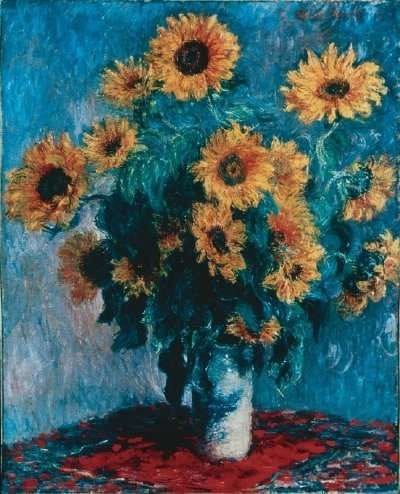
Art has been a medium of visual expression used to convey a wide range of tangible and intangible ideas. Art can take the viewer to different times and to different worlds. It tin also be used to introduce different levels of vocabulary for students of a second language.
Learning a second language, for most teenagers, for case, is a challenging experience. They are non just trying to arrange to a new language, merely they are also trying to suit to themselves and a new environs. They are aware of almost everything, only they are highly aware of their functioning in the classroom. By changing the pupil's focus to something creative where anybody participates, a certain degree of self-judgment is thus eliminated.
The art feel in the classroom has to be a pleasant i for both the student and the teacher. I practise non propose an in-depth study of art, but the employ of information technology as a language evolution tool. The student becomes familiar with the works of art, but he does not actually need to understand them in depth, it is the first impression that the student receives as a new observer that will provide the starting point for the introduction of vocabulary.
Art has e'er been an effective tool for teaching and learning among various classes of people. When combined with reading, writing, speaking and listening, art can open doors to loftier levels of analysis and also challenge students to explore their surroundings and thus observe ways for sophisticated understanding and communication. Familiarizing students with the arts is an enjoyable role of accurate learning. "The middle and soul that complement the mind and body, a powerful integrative force that teaches every social, creative, emotional, intellectual and physical child" — (Le Francois, Psychology for Teaching, p. 499).
Why employ art in the classroom?
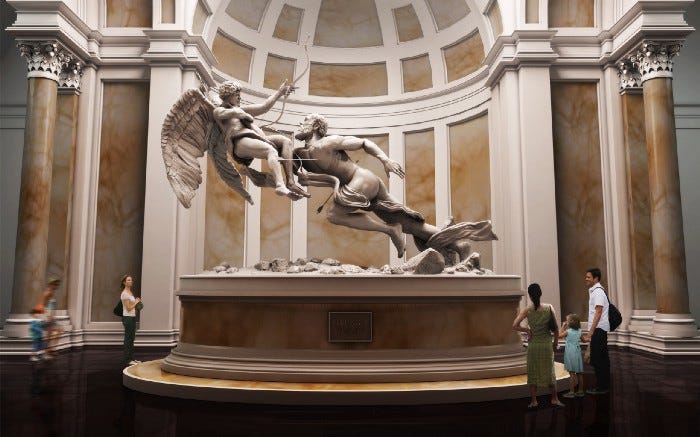
Lessons based on works of fine art take many benefits for the teacher and students.
1. Art tin exist very stimulating and leads to a wide variety of activities. In its simplest form, you can describe a painting, but with a picayune more inventiveness, all types of exercises are possible. For example, the well-known "Grammar Auction" activeness tin can be redesigned as an "Art Sale". And countless adaptations with existing exercises.
2. Using art provides a change of step. While many teachers use visual images to innovate a topic or language item, that epitome tin be a piece of art, which encourages them to go involved on a very different level.
3. Incorporating art into the classroom develops language skills in the real world. Visiting an fine art exhibition or museum will awaken habits that students / families may not have yet experienced.
iv. Thinking or even creating is very motivating. Y'all can take the emphasis off precision and put information technology in fluency and the ability to express thoughts and ideas clearly. The answer to art has the potential to develop creative thinking skills. Students at a pre-intermediate level, for example, will be able to read a cursory biography of an artist and hash out how his art portrays different aspects of their lives.
The excellent approach to ESL students at the J. Paul Getty Museum
Historically, art museum didactics departments have focused on the apply of works of art to appoint with fine art history and artistic practices. In recent years, museums have reconsidered the relevance of a historical focus of fine art for their local communities. In Los Angeles, where the J. Paul Getty Museum is located, current demographic data indicates that 41% of students are English language learners, 94% of them speak Spanish. Language through fine art: an English enrichment curriculum for second language learners, from the Museum'south Section of Education, seeks to meet the needs of this audience past using the universal language of visual fine art to overcome linguistic communication barriers.
The curriculum uses art objects equally a catalyst to amend linguistic communication skills, develop new vocabulary and betrayal various visitors to a variety of cultures and experiences worldwide.
The "Learning Through Fine art" of the Museum of Fine Arts in Houston is a curriculum portal that consists of four parts:
:: Curricular connections: written and tested by teachers in the Houston area, curriculum connections are flexible and can be easily incorporated into language arts, social studies, mathematics, science and art classes.
:: Image library: search by content expanse and mental addiction or thinking disposition to discover the artwork that adapts to the needs of your classroom.
:: Pedagogy tips: techniques for incorporating object-based teaching in your classroom and for integrating college-level cognitive skills to promote students' evolution of 21st century skills.
:: Teaching resources: online resource with museum collection materials that can be easily integrated into the Thou-12 curriculum.
Get inspired and accept art to your classroom!
Source and reading suggestions
Thinking Fast and Slow — Daniel Kahneman
Where Good Ideas Come From — Steven Johnson
The War of Fine art — Steven Pressfield
The Artistic Habit — Twyla Tharp
Source: https://katiabrunetti2.medium.com/language-teaching-through-art-1e3e7a077d37
0 Response to "Give Me 4 Examples That Are Used in the Art of Language"
Post a Comment